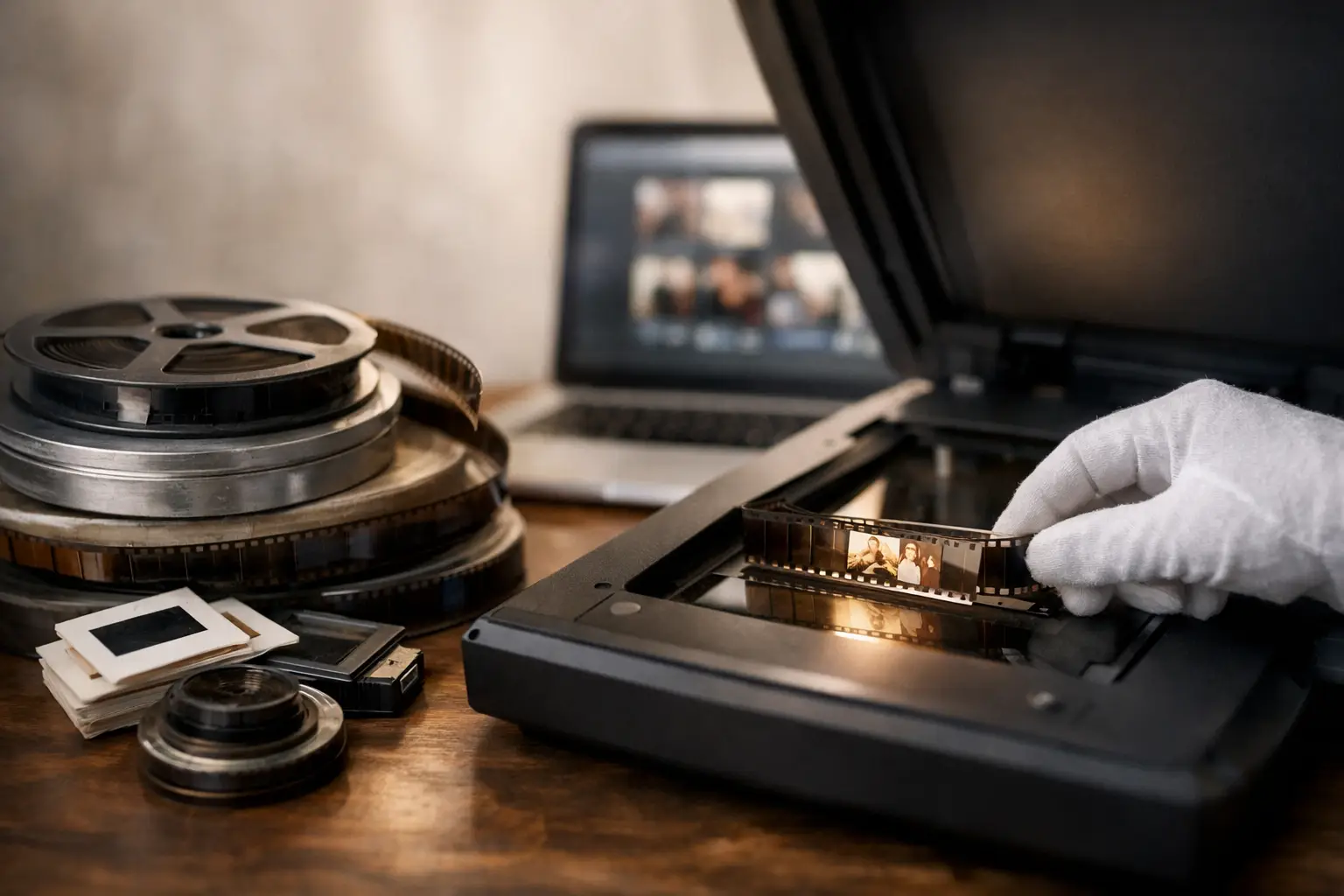
Film Transfer That Protects What Matters

A box of old film reels usually sits untouched for years until someone asks what is on them. That is when film transfer becomes more than a technical service. It becomes the step that keeps family history, school events, church programs, and business footage from fading away on a format most people can no longer play.
Film does not wait patiently forever. Even when stored carefully, 8mm, Super 8, and 16mm reels can collect dust, shrink, develop color shifts, or become brittle with age. Once that damage starts, every projection adds more risk. A professional transfer gives you a safer way to view, save, copy, and share what is on those reels without putting the original through more wear.
What film transfer actually does
Film transfer is the process of converting motion picture film into a modern digital format. For most families, that means taking home movie reels and turning them into files they can watch on a computer, smart TV, phone, or external drive. For organizations and businesses, it can mean preserving archival footage for presentations, recordkeeping, marketing, or internal history projects.
The value is not just convenience. It is preservation. Once your footage is digitized, it becomes easier to back up, duplicate, edit, and distribute. You are no longer dependent on aging projectors, replacement bulbs, or equipment that may be hard to service.
There is also a practical difference between simply capturing an image and doing the job well. Quality transfer work aims to produce a stable, clean, watchable result while handling the original film carefully. That matters when the reel contains footage that cannot be recreated.
Why old film reels need attention sooner rather than later
Many people assume film lasts forever because they have heard that film can outlast videotape. In some cases, that is true, but it does not mean film is immune to age. Storage conditions make a big difference. Heat, humidity, dust, and poor handling can all shorten the life of a reel.
Some of the warning signs are obvious. A reel may smell unusual, appear warped, or break when handled. Other problems are less visible at first, such as fading color, weakened splices, or image instability. Even if the film still looks usable, waiting too long can reduce your options later.
That is one reason many customers decide to transfer first and sort everything else afterward. Once the footage is digitized, you can decide what to edit, duplicate, or share without continuing to handle the original. For families, that often means preserving once-in-a-lifetime moments. For a company, school, or community organization, it may mean protecting footage that documents an important part of its history.
Film transfer for 8mm, Super 8, and 16mm
Not all film formats are the same, and that affects how they should be handled. Standard 8mm and Super 8 are common home movie formats, while 16mm often appears in educational, institutional, and professional footage. Each format has its own physical characteristics, and older reels may include brittle sections, damaged sprockets, or splices that need extra care.
This is where experience matters. A transfer service should know how to inspect film before processing, identify issues that could affect playback, and work with equipment designed for archival handling. In some cases, the reel transfers smoothly. In others, minor repair or careful preparation may be needed first. The right approach depends on the condition of the film, not just the label on the box.
That is also why a one-size-fits-all promise can be misleading. Some reels are in great shape and transfer quickly. Others require more attention to avoid damage or to get the best possible image. A trustworthy provider explains that difference clearly instead of treating every reel as identical.
What to expect from a professional film transfer service
The best transfer process feels straightforward from the customer side, even though the work behind it is detailed. You bring in your reels, explain what you have if you know it, and let the service evaluate the material. From there, the goal is to convert your film into a usable digital format while preserving as much quality as the original allows.
That last part is worth keeping in mind. A digital transfer cannot invent detail that was never captured or completely erase age-related wear. If a reel is underexposed, shaky, or faded, those qualities may still be present. Good transfer work respects the original footage while giving you a clean, stable version that is much easier to watch and preserve.
Delivery options matter too. Some customers want a DVD because it is familiar and easy to play. Others prefer digital files they can store on a flash drive, hard drive, or computer. Many families want both - one version for simple viewing and another for long-term backup. Businesses and organizations often need files that can be used in editing, presentations, or internal archives.
Why local service makes a difference with film transfer
When you are handing over irreplaceable film, trust matters. People want to know where their media is going, who is handling it, and how quickly they can expect it back. That is one reason local service remains valuable, especially for customers who would rather talk with a real person than ship family memories across the country and hope for the best.
Working with a local provider also makes it easier to ask questions about formats, turnaround, delivery options, and any visible damage on the reels. If your project includes more than film - such as videotapes, slides, negatives, or audio cassettes - you can often handle everything in one place instead of piecing together multiple vendors.
For West Virginia families, small businesses, churches, schools, and community organizations, that convenience is not a minor detail. It reduces confusion and gives you a clearer path from outdated media to modern files you can actually use. Digital Transfer Service of West Virginia fits that need by offering film transfer alongside broader media conversion and production support, with fast turnaround and personal service that many customers still prefer.
How to prepare your reels before transfer
You do not need to become a film expert before bringing reels in, but a little preparation helps. If the reels are labeled, keep those notes with them. Dates, names, locations, and event descriptions can make it easier to organize the finished files. If some reels seem damaged or tightly wound, do not force them open or try to project them first.
It also helps to group similar items together. Family vacations, holidays, weddings, school activities, and business footage can each be sorted loosely so the final digital files make more sense. If you are unsure what format you have, that is normal. Many customers know they have film but are not sure whether it is 8mm, Super 8, or 16mm. A professional service can identify that for you.
The main thing is not to wait for the perfect time. Film often sits in closets, basements, and storage rooms because people assume the process will be complicated. In reality, the hardest part is usually deciding to start.
The real benefit of film transfer
The benefit of film transfer is not only that old reels become digital. It is that the footage becomes usable again. Grandchildren can see relatives they never met. A business can repurpose historical footage for an anniversary project. A church or local group can preserve decades of community life before those records are lost.
That usefulness changes how people value what they already have. A reel that has not been viewed in 30 years becomes something you can watch tonight, save in multiple places, and pass along without risking the original. That is a practical result, but it is also a meaningful one.
If you have film tucked away and have been meaning to do something with it, this is usually the right time. The reels will not get younger, and the equipment to play them will not get easier to find. A careful transfer gives you a safer way to hold on to what matters and a much easier way to share it with the people who should see it.


Comments