Video to DVD Conversion Near Me

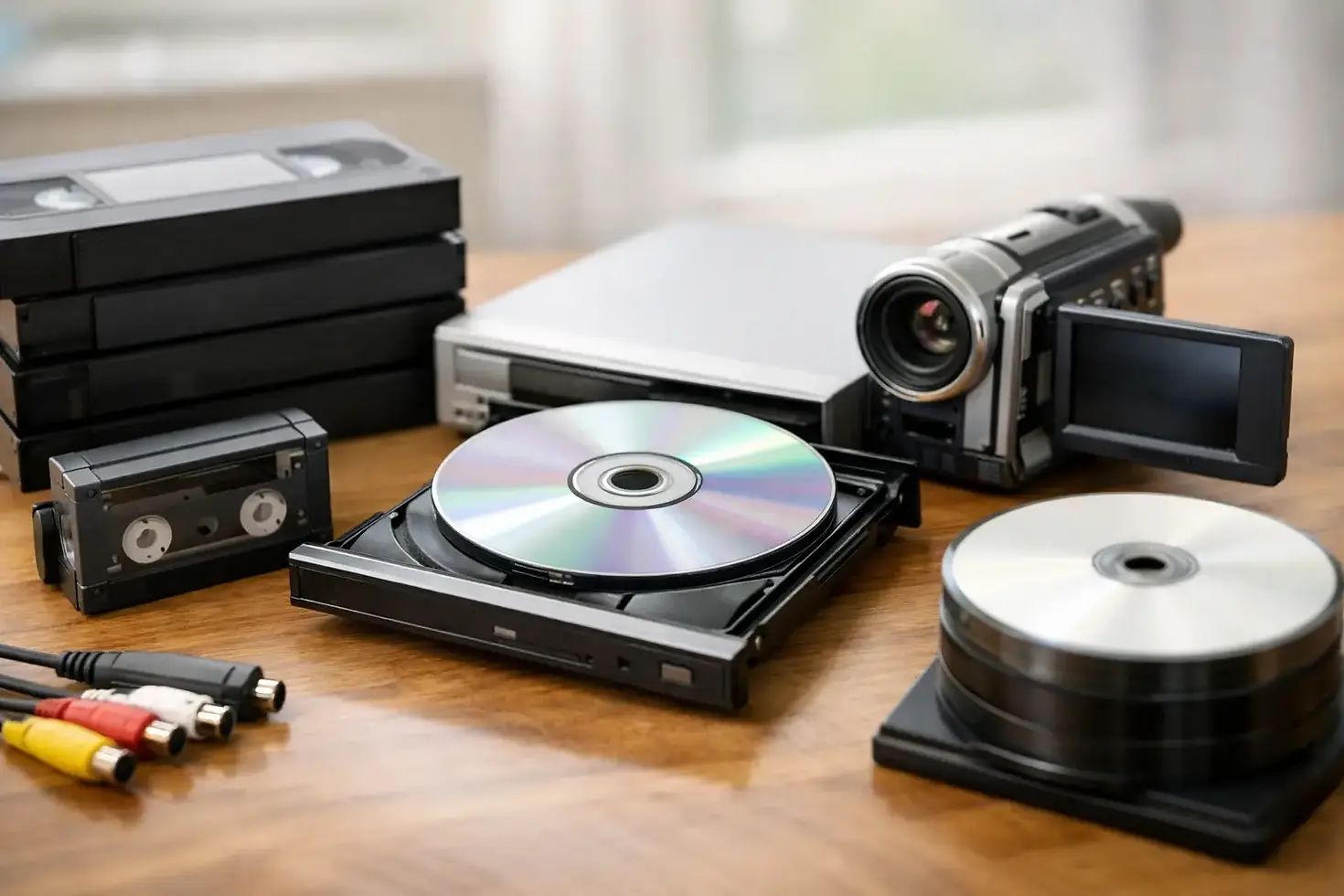
That box of tapes in the closet is not getting younger. If you have been searching for video to DVD conversion near me, you are probably not looking for a tech lecture. You want to know who can handle your tapes carefully, what formats can be transferred, how fast it can be done, and whether the finished copy will actually play when you need it.
For most families and businesses, this service is about more than convenience. VHS tapes, camcorder cassettes, and other older media break down over time. Playback machines are harder to find, and every year it gets riskier to leave important recordings sitting on a shelf. A good local transfer service helps you preserve what matters before the signal fades, the tape snaps, or the only working player finally gives out.
Why local video to DVD conversion still matters
Mail-in services may look simple at first, but there is real value in working with a nearby provider. When the media is personal, irreplaceable, or tied to business records, most people want direct communication and a clear process. Local service gives you a place to ask questions, explain what is on each tape, and talk through special requests like editing, duplication, or digital copies for phones and smart TVs.
That matters even more when the condition of the media is unknown. Some tapes play fine. Others have tracking issues, mold, broken housings, or damage caused by age and storage conditions. A local provider can often spot those issues early and tell you what is realistic. That kind of hands-on guidance is hard to replace.
There is also the trust factor. Home movies, wedding footage, training archives, legal recordings, church programs, and company media all carry different stakes. Working with a nearby specialist gives you accountability and a better sense of where your media is, who is handling it, and how quickly you can get it back.
What to expect from video to DVD conversion near me
The process should feel straightforward, not confusing. In most cases, you bring in your tapes, explain what format you have, and discuss what kind of finished product you want. Some customers want a simple DVD copy. Others want both DVD and digital files so they can watch, share, and back up the content more easily.
A professional transfer service should also explain whether your tapes need repair, whether the footage can be improved through basic editing, and whether multiple copies are needed. Businesses and organizations often need duplicates for presentations, training, archives, or distribution. Families may want one copy for themselves and extras for children or relatives.
Turnaround time is another major part of the decision. If you are preparing for a memorial service, anniversary, reunion, or company event, timing matters. Fast service is useful, but only if quality control is still there. The right provider balances both.
Which formats can usually be transferred
When people say video to DVD conversion, they often mean VHS. But many homes and offices have a mix of formats. A qualified transfer company usually works with more than one tape type, and that can save you from having to piece together multiple services.
Common formats may include VHS, VHS-C, MiniDV, Hi8, Digital8, and 8mm video. Some providers also handle older film formats, audio cassettes, slides, negatives, and specialty media. That broader capability matters if your project is not just one tape in a drawer, but a full collection gathered over decades.
For some customers, DVD is only part of the goal. If you want your old recordings on a flash drive, smartphone, computer, or smart TV, ask about digital transfer options at the same time. Converting once and receiving more than one usable format can be the most practical route.
DVD is useful, but digital copies may matter too
DVD still has value. It is familiar, easy to play for many households, and useful for gifting or keeping a physical archive. For churches, schools, clubs, and local organizations, DVDs can still be a simple distribution format.
At the same time, it depends on how you plan to use the footage. If your family mostly streams content and no longer has a DVD player in every room, digital files may be just as important as the disc itself. If you are a business, digital delivery may be better for training, presentations, or storage.
That is why the best conversation is not just, "Can you put this on DVD?" It is, "How do I want to use this after it is transferred?" A service-oriented provider will help you think through that without making it complicated.
How to choose the right local transfer provider
Not every company offering media transfer provides the same level of care. Price matters, but it should not be the only factor when the recordings are one of a kind. A very low quote may leave out repair work, quality checks, or customer support.
Look for a company that explains its process clearly and handles a wide range of formats. Experience with damaged or aging tapes is a strong sign, especially if your media has been stored in basements, attics, garages, or old office cabinets. You also want to know whether the company provides duplication, editing, and alternate digital delivery if needed.
Turnaround time should be realistic and clearly communicated. A fast promise is helpful, but a trustworthy provider will also tell you when a more complicated project needs extra care. Good customer service usually shows up in the details - responsiveness, plain answers, and a willingness to discuss your specific media instead of giving a one-size-fits-all response.
Questions worth asking before you hand over your tapes
If you are comparing local options, ask what tape formats they accept and whether they inspect media for damage before transfer. Ask what happens if a tape is broken or has playback issues. Ask whether the final product is DVD only or whether digital files are available too.
It is also smart to ask about duplication and editing. If you want to remove blank sections, combine footage, add titles, or create multiple copies, that is easier to plan upfront. For business clients, it helps to ask whether the company can support larger batch jobs, duplication runs, or production-related needs beyond basic transfer.
A local full-service provider can often do more than customers expect. Digital Transfer Service of West Virginia, for example, serves both households and organizations that need preservation, conversion, duplication, repair, and post-production support. That range can be especially useful when a simple transfer project turns into something larger.
Why speed and care need to go together
People often wait until there is a deadline. A family event is coming up. A tribute video is needed. A retiring employee's archive has to be reviewed. A training library is still sitting on tape. In those moments, speed matters.
But old media does not respond well to rushed handling. Tapes may need cleaning, repair, or careful playback adjustments. The best transfer work comes from a process that moves quickly without treating each item like a commodity. That combination of fast turnaround and personalized service is what many customers are really searching for when they type video to DVD conversion near me.
For families, businesses, and community organizations
This kind of service is not only for old home movies. Families often bring in wedding tapes, holiday recordings, school events, and footage of relatives whose voices are no longer heard anywhere else. Those transfers preserve moments that cannot be recreated.
Businesses and organizations have their own reasons. Training videos, promotional footage, meeting recordings, legacy presentations, and archival media can all lose value if they remain stuck on outdated formats. Converting them to DVD or digital files makes them usable again.
That is why local media conversion is still relevant. It protects memory, supports access, and gives old recordings a practical future instead of letting them disappear in storage.
If you have been putting this off, now is a good time to gather your tapes, figure out what you want to keep, and talk with a local specialist who can walk you through the next step with care.


Comments