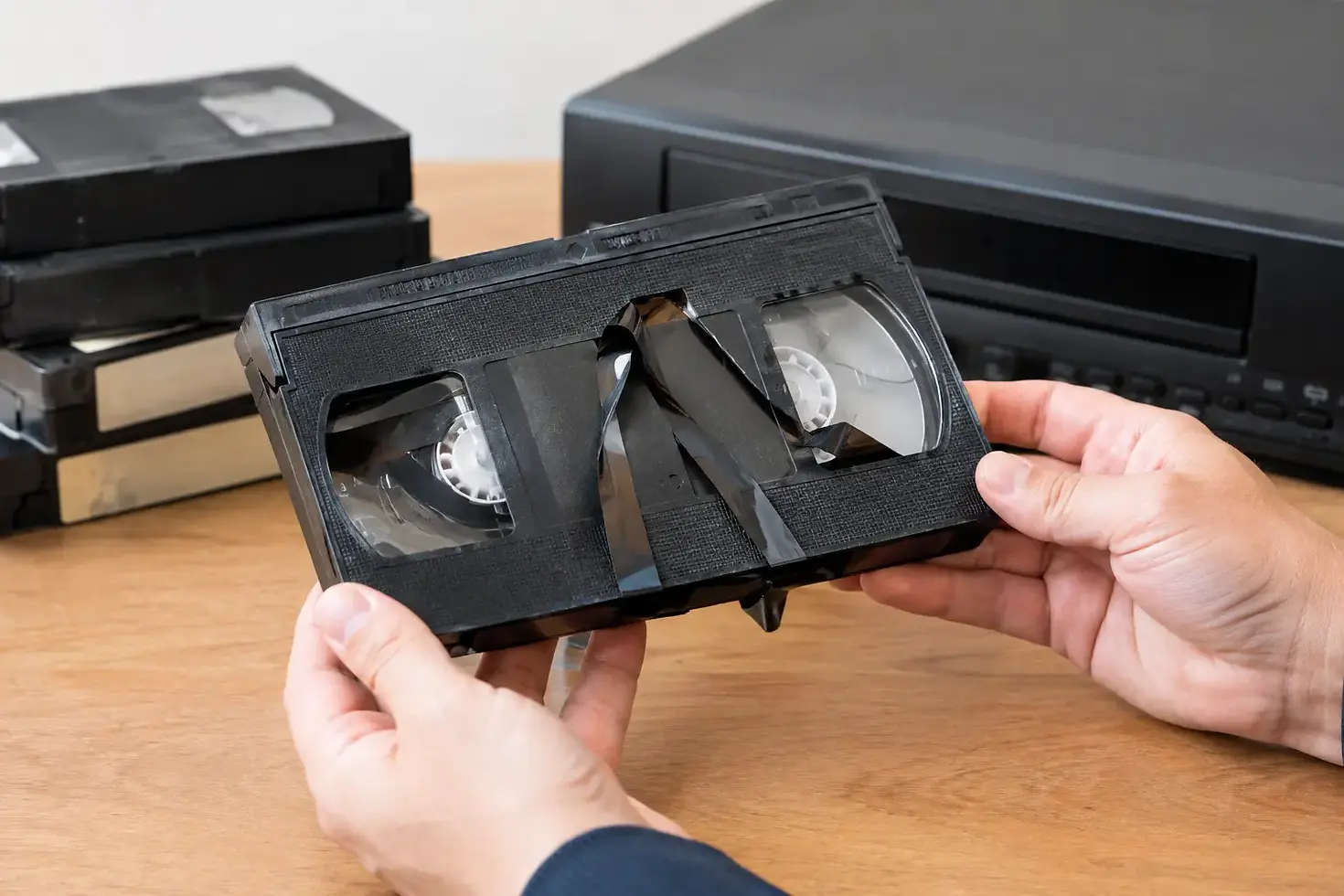
Can Damaged VHS Tapes Play? What to Check First

A VHS tape can look perfectly ordinary on the shelf and still be one play away from a serious problem. Can damaged VHS tapes play? Sometimes, yes. But whether they should play is a different question. A damaged cassette can jam, shed tape material, tangle inside the VCR, or leave behind the only recording of a family gathering, wedding, school program, or business event.
The safest approach is to identify the type of damage before putting the tape into a machine. A little wear may allow a careful playback long enough for transfer. Other issues need repair first, and some tapes should not be tested at home at all.
Can Damaged VHS Tapes Play Without Causing More Damage?
It depends on the condition of both the cassette and the tape inside it. VHS tape is a thin strip of magnetic material that moves past spinning video heads at high speed. When the tape is wrinkled, sticky, torn, moldy, or improperly wound, that movement can turn a small problem into a much larger one.
A cassette with a cracked outer shell may still play if the tape path is clear and the reels turn freely. A tape with a broken leader, loose spool, or badly creased section may require hands-on repair before playback. If mold is present, playing the cassette can contaminate the VCR and potentially damage other tapes afterward.
The goal is not simply to get a picture on the screen. The goal is to recover the recording with as little additional wear as possible. Since VHS tapes continue to degrade with age, one careful transfer to a digital format is often safer than repeated viewing.
Start With a Careful Visual Inspection
Do not insert a questionable tape into a VCR right away. Hold the cassette with the label facing up and inspect the shell, reels, and visible tape through the clear windows. Avoid touching the tape surface with your fingers.
Look for a cracked, warped, or partially separated cassette shell. Check whether either reel appears loose, uneven, or jammed. If the tape is visibly pulled out of the cassette, curled, or bunched along an edge, it should not be played until it has been repaired and properly rewound.
A quick look can also reveal signs of mold. Mold may appear as white, gray, or fuzzy residue on the tape pack, sometimes with a musty odor. Do not play a moldy tape in a household VCR. The residue can clog video heads and spread to the machine's internal parts. Mold-affected tapes need specialized handling in a controlled environment.
Common VHS Problems and What They Mean
Some damage is easier to address than others. The following issues are common in older VHS, VHS-C, and S-VHS tapes.
Cracked or broken cassette shell: The recording may be fine, but the shell can prevent smooth tape movement. In many cases, the tape can be moved into a compatible replacement shell.
Torn tape or detached leader: A clean break can often be spliced, although a few seconds of recorded material at the repair point may be lost.
Creased, wrinkled, or crumpled tape: This can create tracking lines, distorted sound, picture dropouts, or a tape jam. Severe creases are risky to play.
Sticky or tightly packed tape: Old tapes sometimes bind on the reels, especially after years in heat, humidity, basements, garages, or attics. Forcing playback can stretch or snap the tape.
Mold or residue: This requires professional cleaning before the cassette goes near playback equipment.
Missing or broken pressure pad components: These are more common on smaller formats but can interfere with stable playback and need proper cassette repair.
A damaged shell does not always mean the recorded footage is lost. Conversely, a clean-looking cassette can hide tape deterioration inside. That is why a cautious inspection and the right playback equipment matter.
When It May Be Reasonable to Test a Tape
A tape may be a candidate for a limited test if the shell is intact, the reels turn normally, the tape is evenly wound, and there is no visible mold, stickiness, severe wrinkling, or loose tape. Even then, use a VCR that is known to be clean and in good working order.
If you test it, stay with the machine. Watch for unusual sounds such as squealing, clicking, or a strained motor. Stop immediately if the picture suddenly breaks up beyond normal VHS tracking noise, if the tape will not move smoothly, or if the VCR ejects it with tape hanging out.
Do not repeatedly rewind and fast-forward an aging cassette to find a specific scene. Each pass puts stress on the tape. If the footage is irreplaceable, it is usually better to have it transferred during the first successful playback rather than treating the tape like a copy you can replace.
Why a VCR Can Make the Situation Worse
A neglected VCR is often the hidden danger. Worn belts, dirty video heads, misaligned guides, and weak loading mechanisms can damage even a healthy tape. If a cassette gets caught, the machine may pull tape from the shell before it stops.
Avoid using a VCR that has recently eaten another tape, makes grinding noises, or has not been used in years. Never pull a tangled tape out by force. Unplug the VCR, open it only if you understand the mechanism, and avoid pulling against the direction of the reels. A professional can often recover tape that has been caught inside a machine, but unnecessary handling can add creases and breaks.
Cleaning a VCR with the wrong materials can also create problems. Abrasive cleaning tapes may be too harsh for some older machines, and cotton swabs can leave fibers behind. For valuable footage, the condition of the playback deck is every bit as important as the tape itself.
Repair Before Transfer, Then Preserve the Digital Copy
For tapes with physical damage, repair and transfer are usually best treated as one job. The cassette may need a shell replacement, a leader repair, careful respooling, or cleaning before it can be safely played. Once the tape is stable, the footage can be captured to a modern digital file, DVD, USB drive, or another delivery format that fits your needs.
There are trade-offs. A repaired splice may create a brief gap in the video. Severe tape damage may leave permanent lines, dropouts, color shifts, or audio distortion. Those flaws reflect the tape's condition, not necessarily the quality of the transfer. Still, a professional transfer can preserve the maximum recoverable image and sound before the tape deteriorates further.
Digital Transfer Service of West Virginia handles video tape repair and conversion with the care that irreplaceable recordings deserve. For families, that may mean preserving a child's first steps or a loved one's voice. For an organization or business, it may mean saving training footage, historical events, presentations, or archived promotional video that cannot be recreated.
Storage Matters Before You Bring Tapes In
Until a damaged VHS tape can be evaluated, store it upright in its case in a dry, temperature-stable room. Keep it away from direct sunlight, heating vents, damp basements, garages, and attics. Do not stack heavy items on top of the cassette.
If a tape has been in a cold car or storage area, let it return to room temperature before anyone attempts playback. Sudden temperature changes can lead to condensation, which is especially risky around older electronics and tape surfaces.
Label what you know, including the tape's approximate date, contents, and any issue you have noticed. If the cassette has been damaged by water, smoke, mold, or a VCR jam, mention that before service begins. That information helps determine the safest next step.
The moment a VHS tape starts showing its age is not the time to gamble on repeated home playback. Set it aside, keep it protected, and let a careful inspection determine whether repair, cleaning, or direct transfer offers the best chance of saving what is still there.


Comments