
Film Reel Digitizing Service for Old Home Movies
- Sabe Ellis
- Aug 7
- 6 min read

A film reel digitizing service gives old home movies a usable future before time, heat, dust, and repeated projector runs take more of a toll. Those small reels may hold a child’s first steps, a family reunion, a school event, or a piece of local history that exists nowhere else. Converting them carefully lets you watch, share, edit, and preserve those moments without risking the original film every time.
For many West Virginia families, the question is not whether the memories matter. It is whether the reels can still be played safely and what the finished digital copy will actually look like. A professional transfer process helps answer both questions with careful inspection, proper equipment, and straightforward delivery options.
What a Film Reel Digitizing Service Does
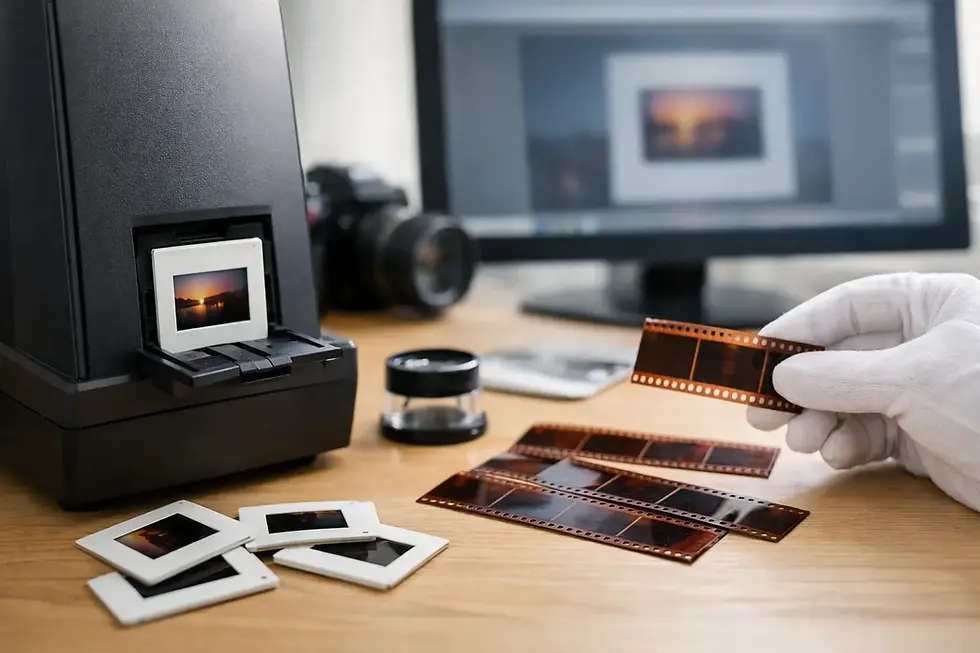
Film digitizing converts motion-picture film into a digital video file. The most common home movie formats are Regular 8mm, Super 8, and 16mm. Although these formats may look similar from a distance, they use different film widths and sprocket-hole patterns, so the equipment and setup need to match the reel.
The work begins with identifying the format and checking the film’s overall condition. Old reels can have brittle sections, loose leaders, failing splices, curled film, dirt, or damage near the edges where the sprocket holes guide the film through a projector. A reel that has been stored in a hot attic, damp basement, or garage may need extra care before it can move through equipment safely.
During transfer, each frame is captured and assembled into a digital video. The goal is to create a stable, watchable file that reflects the character of the original footage. Home movies from decades ago will not suddenly look like modern high-definition video, and that is a good reason to set realistic expectations. A quality transfer preserves the detail the film contains while avoiding unnecessary handling of an irreplaceable original.
Depending on the project, the finished video may be provided as digital files, placed on DVD, or incorporated into a larger video project. Digital files are practical for viewing on computers, smart TVs, phones, and tablets. They also make it easier to send a clip to relatives, create a memorial montage, or save copies in more than one place.
Why Old Film Should Be Transferred Sooner Rather Than Later
Film does not fail on a deadline, but it does age. Color film can fade, especially when it has been exposed to heat or poor storage conditions. Dust and scratches can become more visible. Splices can dry out and separate. In severe cases, film can become too fragile to run safely without repair or specialized handling.
There is also a practical concern: projectors are no longer part of most households. A reel can sit for years because no one has a working projector, the right bulb, or confidence that the film will not be damaged during playback. Even if a projector still works, it is not always the best way to view aging film. Each run introduces another opportunity for a jam, tear, or broken splice.
Digitizing does not replace the original reel. It gives you a viewing copy that can be used freely while the film itself can be stored safely. Once the footage is digital, you can make backup copies for family members and avoid relying on one aging reel as the only record of the event.
What to Gather Before Sending in Your Reels
A little preparation can make a film transfer project easier, especially when a box contains reels from several decades. You do not need to become a film expert, but labeling what you know helps keep the story connected to the footage.
If possible, note the approximate year, people, location, and event for each reel. A simple label such as “Christmas at Grandma’s, 1978” is much more useful later than “Reel 4.” Keep reels in the order you want them transferred, and let the transfer provider know if a particular reel is especially important or appears damaged.
Do not try to force a stuck reel onto a projector or unwind film that feels brittle. Avoid taping broken sections with household tape. Adhesives can leave residue and make a later repair more difficult. It is better to leave questionable film as it is and have it inspected by someone who works with legacy media.
For business, nonprofit, school, or municipal archives, organization matters even more. Identify ownership, usage needs, and any required naming convention before transfer begins. A file named “TrainingFilm1986Part1” is easier to locate later than a generic file name, particularly when an organization is digitizing a large collection.
Choosing a Film Reel Digitizing Service
The right provider should be clear about the formats they handle, how originals are treated, and what you receive at the end of the project. You should not have to guess whether your 8mm, Super 8, or 16mm reels can be accepted or whether a digital file, DVD, editing, or duplication option is available.
Local service can be especially reassuring when the reels contain one-of-a-kind family footage or important organizational records. You can ask questions, explain what is in the collection, and work with someone who understands that the value is not measured by the length of the reel alone. The footage may be only a few minutes long, but it could be the only moving image of a grandparent, former employee, or community event.
Turnaround time also deserves attention. A provider that offers a 1-5 day turnaround can be helpful when footage is needed for a reunion, anniversary, funeral tribute, presentation, or scheduled event. Timing can depend on the number of reels, film condition, and whether you need editing or custom production work, so it is wise to discuss the project deadline at the beginning.
Ask about quality checks and delivery choices, too. A good service should be able to explain the process in plain language, not bury you in technical jargon. Digital Transfer Service of West Virginia combines modern transfer technology with hands-on service, helping clients move from aging reels to practical digital media without making the process complicated.
Digital Files Give Old Footage New Uses
After transfer, home movies become much easier to enjoy. Families can watch them together on a television instead of setting up an old projector. Relatives who live out of state can receive copies. Short clips can be included in birthday videos, anniversary presentations, graduation displays, or family history projects.
Digitized film can also be improved as part of a post-production project. Footage may be trimmed, placed in chronological order, combined with photographs, or paired with titles and music for a polished montage. That is often a better fit for an event than showing every unedited minute from a reel, especially when the original footage includes long scenes, camera stops, or accidental shots of the ground.
For organizations and small businesses, older film may have value beyond nostalgia. It can support an anniversary campaign, historical exhibit, training presentation, documentary, community outreach effort, or social media project. The original footage should be preserved, but a carefully edited digital version can make it relevant to a modern audience.
Protecting the New Digital Copy
A transfer is only as safe as the way it is stored afterward. Keep at least two copies of your digital files in separate places. For example, you might keep one copy on a computer or external drive and another with a trusted family member. If you choose online storage, use it as an additional copy rather than the only place the footage exists.
Clear file names matter. Include a date or estimated decade, the event, and family or organization name when possible. A file that is easy to identify today will be much easier for children, grandchildren, coworkers, or future archivists to understand years from now.
Store the original reels in a cool, dry, stable location after digitizing. Avoid attics, garages, sheds, and damp basements. The digital copy makes viewing simple, while responsible storage gives the original film its best chance of remaining intact.
The reel in the closet may not look urgent, but its images cannot be recreated once deterioration takes hold. Bringing those memories into a format your family or organization can actually use is a practical way to keep them close, shareable, and protected for the people who come next.


Comments